Gardenia Primary School was the scene of celebration this week as Tropic Plastic and Packaging handed over six mobile libraries — three to Gardenia Primary and three to Assegai Primary — containing a total of 1,800 books.
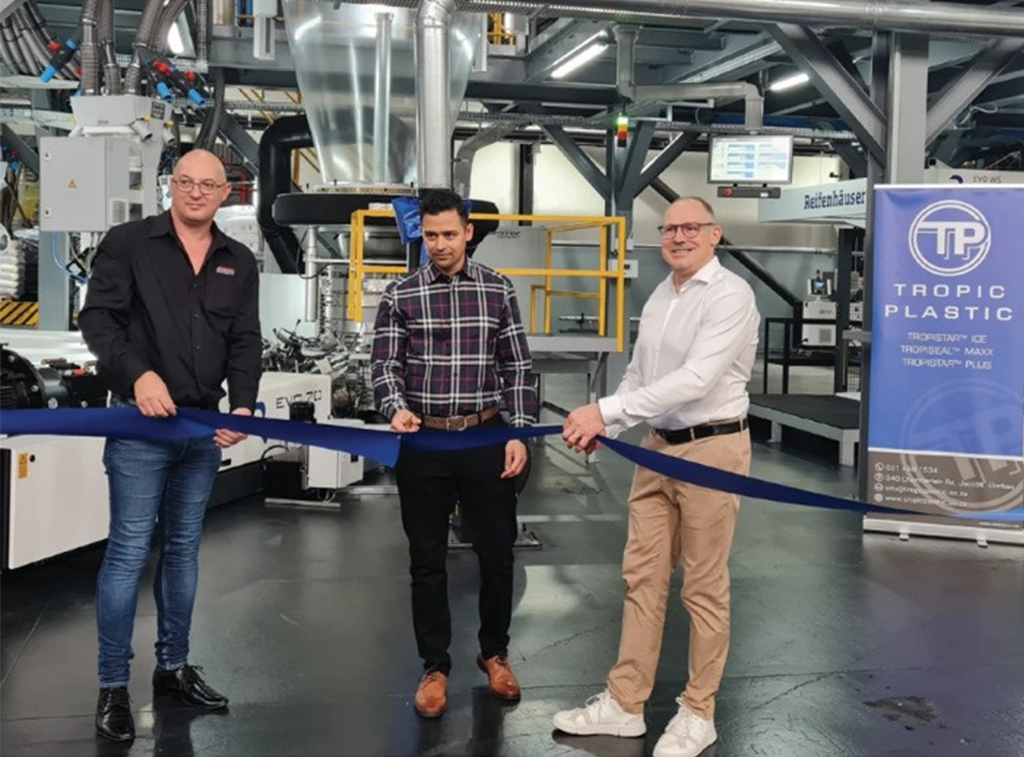
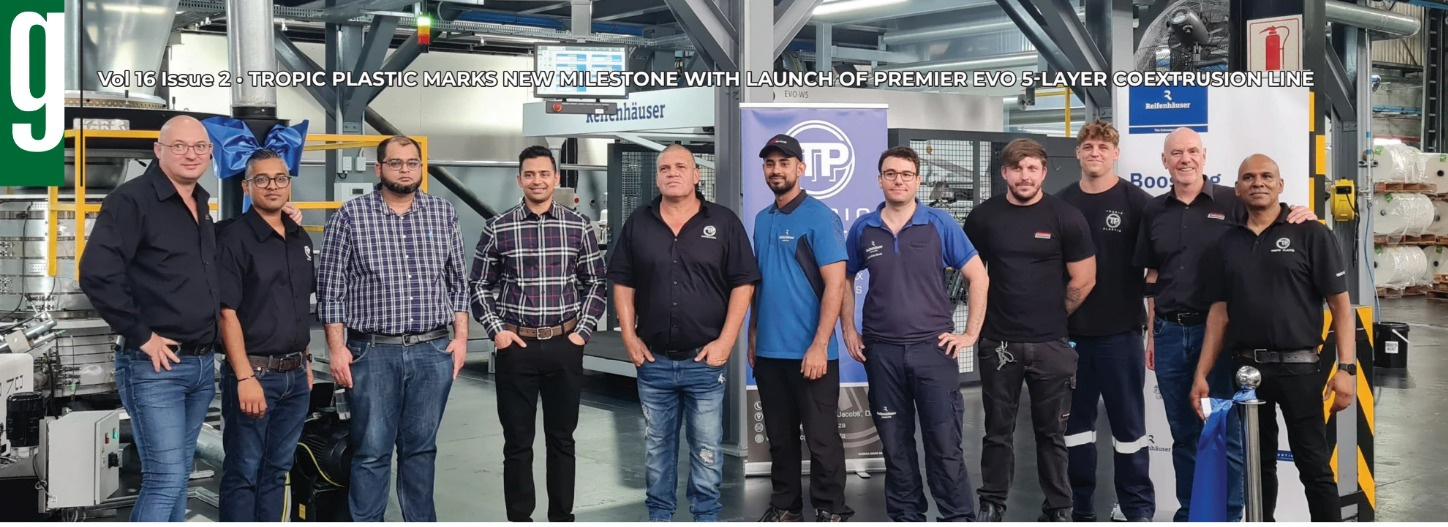
The inauguration was led by Ismail Simjee, CEO of Tropic Plastic, alongside Sascha Skora, Senior Sales Manager at Reifenhäuser Blown Film, and Bruce Beswick, Managing Director and Riaan Hopley, Head of Sales at Beswick Machinery, who holds the Reifenhäuser agency in South Africa. The gathering highlighted not just a new piece of machinery, but a longstanding partnership that has shaped the South African flexible packaging industry for decades.
A legacy of collaboration
Tropic Plastic, an institution with nearly 70 years of history, has long served as a cornerstone for local packaging expertise. This latest installation represents the tenth collaboration between Simjee and the German OEM, Reifenhäuser, bringing the facility’s total extrusion lines to 18.
“Achievements like this are never the result of one company alone but rather the collective effort of committed partners and dedicated teams e.g. structural engineers, builders, the local agents being Beswick, Reifenhäuser and everyone else who came together to make this a reality,” said Ismail Simjee, Tropic Plastic’s CEO.
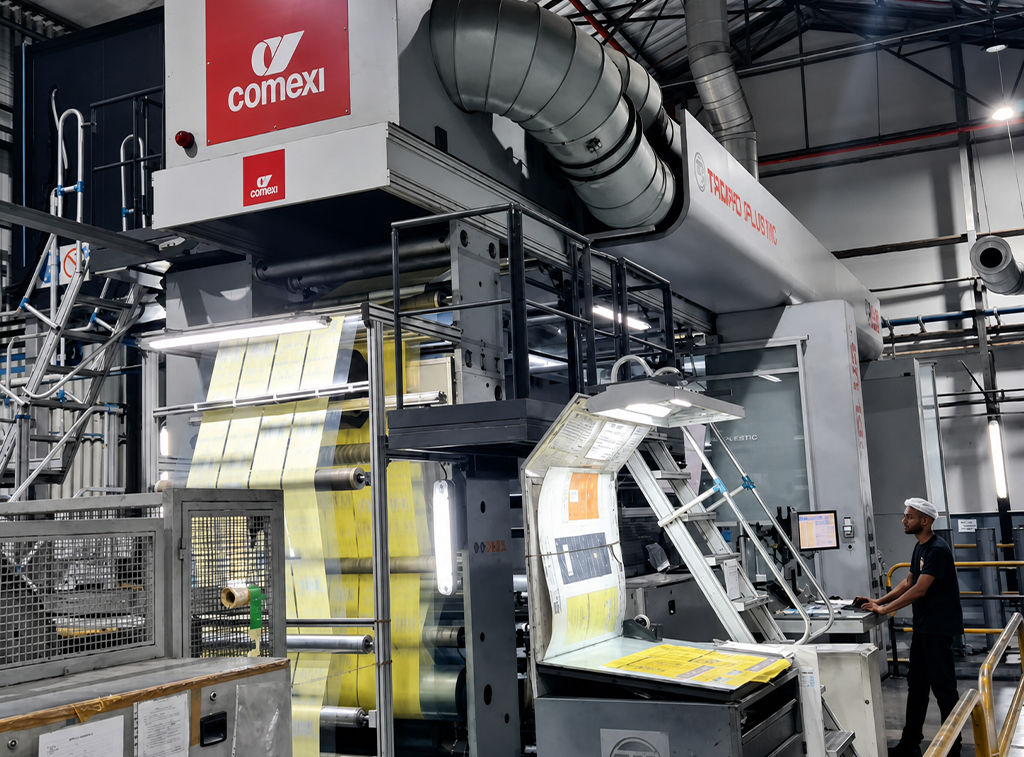
The project required extensive civil engineering, including raising structures and reinforcing floors to accommodate this impressive 2600mm wide equipment. Despite the complexity, the installation was completed two weeks ahead of schedule, a testament to the synergy between Tropic Plastic, Reifenhäuser and Beswick Machinery.
Unprecedented output and efficiency
The EVO 5-layer High Output line is engineered for high-volume, sustainable production. During the live demonstration, the machine was observed exceeding 1 000 kg/h consistently. The configuration utilises oversized extruders to manage melt temperatures — a critical feature for maintaining bubble stability in the warm South African climate.
The EVO 5-layer High Output line is engineered for high-volume, sustainable production. During the live demonstration, the machine was observed exceeding 1 000 kg/h consistently. The configuration utilises oversized extruders to manage melt temperatures — a critical feature for maintaining bubble stability in the warm South African climate.
The line also boasts the unique counter-flow triple-lip cooling system from Kdesign (part of the Reifenhäuser Group). By utilising three air streams — one flowing down and two upwards — the machine ensures ultimate bubble stability and perfect gauge tolerances even at peak throughput. The overall efficiency of the EVO Line is further underscored by a total energy consumption rate of just 0.3 kW per kg/h.
Engineering perfection: EVO Ultra Flat
A standout feature of the new installation is the patented EVO Ultra Flat inline flattening unit. As the industry moves toward thinner, more rigid film compositions, the risk of camber, planarity issues or wrinkles on the film increases. The Ultra Flat system uses four individually driven, temperature-controlled rollers to “iron” the film immediately after it collapses, ensuring it is as flat as paper. Positioned right after the primary nip rollers the system uses the first heat, which is another unique feature.
“In the design of the EVO Ultra Flat, we rely on the precise application of temperature and speed. In principle, it functions much like ironing a shirt; you apply heat with the iron and a degree of tension to ensure the fabric is wrinkle-free. This unit performs an identical function for the film, ensuring a perfectly smooth substrate,” Skora elaborated.
For Tropic Plastic, this technology is the key to unlocking the lamination market. By producing perfectly flat film, the company can increase the printing speed and/or reduce the amount of adhesive required in downstream processes, reducing the “curl effect” often seen with uneven substrates.
Controlling destiny: Infrastructure and sustainability
For Tropic Plastic, this technology is the key to unlocking the lamination market. By producing perfectly flat film, the company can increase the printing speed and/or reduce the amount of adhesive required in downstream processes, reducing the “curl effect” often seen with uneven substrates.
The facility owns its own transformer rooms, bolstered by eight intelligent generators. This infrastructure ensures the “workhorse” machinery can run 24/7, 365 days a year without interruption. Furthermore, solar panels covering most of the 100 000 m² plant complement its power demands, aligning with a broader commitment to sustainable manufacturing.
“Tropic is a world-class operation. It is a level of production I haven’t seen before. Each time I walk through the factory I am always struck by the sheer magnitude of the setup. It is incredibly impressive; I have visited many plants globally, and this facility is truly exceptional,” stated Bruce Beswick, Managing Director of Beswick Machinery.
Future horizons
The inauguration marks a pivot for Tropic Plastic. While it remains dominant in the high-volume FMCG market, the new EVO 5-layer technology allows the operation to “dig deeper” into complex lamination markets.
“Significant research has been conducted behind the scenes, and I see immense growth opportunities not only within South Africa but also for export into the broader Southern African region. While global market fluctuations can be a source of concern for some, we remain optimistic. Particularly within the African context, where resource management is critical, there is substantial potential for growth and we are positioned to meet that demand,” Simjee noted.
By combining world-class German blown film technology with a robust, self-sufficient South African infrastructure, Tropic Plastic has solidified its position as a “school for packaging,” ready to compete with the best in Europe and beyond.