Renewable Energy

Increasing Capacity, Reducing Waste – Tropic Plastic paves the way for long term sustainability

The world’s growing concern over climate change has encouraged companies to engage in efforts that promote environmental sustainability. Many large-scale companies are implementing initiatives aimed at reducing their carbon footprint and promoting renewable energy sources. One such company that has amplified energies into long term vision is Tropic Plastic and Packaging Industry (Pty) Limited, having recently installed solar PV and other various advanced technological solutions across its business, to achieve environmental sustainability and prioritize good governance.
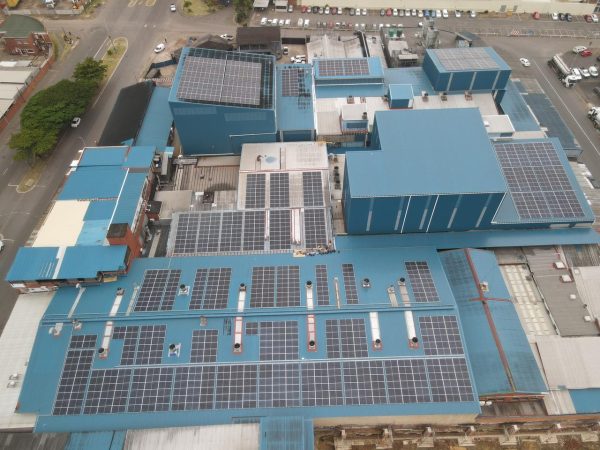
The plastic manufacturer’s commitment to implement innovative solutions to reduce carbon footprint is reflected in their decision to install a 515 kWp Solar facility – one of the largest in their industry to date. This investment will significantly reduce their reliance on non-renewable energy and increased renewable energy generation capacity, thus unlocking further opportunities, and allowing them to derive significant cost savings over time. Moreover, the solution will also support its ongoing drive to create energy-efficient manufacturing processes and improved waste management techniques.
The installation of the solar PV facility will significantly reduce the carbon footprint of the plastic manufacturing firm. By using this form of renewable energy, the company expects a positive reduction in greenhouse gas emissions as well as pollutants that would otherwise be released during the production process. Furthermore, this innovation has fostered additional business opportunities and business partnerships being formed, obtain esteemed international certifications, increase competitiveness, and help them achieve net-zero carbon emissions in their manufacturing process.
Aside from their achievement in renewable energy utilisation, Tropic Plastic has also equipped its factory with advanced technology to enhance their manufacturing process. The inclusion of energy-efficient equipment has enabled the Company to achieve significant reductions in energy consumption during the manufacturing and waste management process. The company’s adoption of a sustainability governance model has helped build trust and credibility with stakeholders, ensuring that the company upholds environmental values.
In a world where sustainability and governance are key factors, this commitment by the Company’s leadership to prioritise ESG as a key business imperative has shown tremendous and positive influence in the industry, also inspiring, and setting a precedent for their peers to innovate better production methods.
In conclusion, the installation of solar PV and advanced technology by the Company has not only showcased their commitment to environmental sustainability, but also demonstrated a governance model that prioritises sustainability. Tropic’s innovation has shown positive impacts not only to their operational processes, but in leading the way for other companies to adopt similar measures. Their actions have earned them a good reputation with stakeholders and customers alike, which will help them continue to drive their initiatives and improve the industry’s environmental and ethical standards.

Environmental Responsibility

Tropic Plastic aims to manage the environmental effects and aspects of all our operations in a responsible and affirmative manner and continually seek to improve on environmental performance through maximum prevention at source and maximum amount recycled by working eco-efficiently.
By ensuring that packaging is recyclable and being environmentally conscious , we will help keep our planet green, with this in mind , we currently recycle 90% of all waste accumulated and aim to decrease plastic waste to landfill by following the hierarchy of reduce, reuse and recycle.
The following practises are followed at Tropic Plastic to reduce the impact on the environment:
  1. Tropic Plastic has its own recycling facility and advanced machinery which ensures waste such as plastic is recycled and cut off waste from production is immediately introduced back into the process.
  2. Printed plastic waste from the process is supplied to external recycling converters who recycle the plastic material into other plastic products for daily use.
  3. Water used in the cooling process is recycled and reused after treatment thus ensuring water consumption is reduced.
  4. Solvent and inks are recycled by our own in-house solvent recovery system thus reducing emissions.
  5. We have implemented a paperless office system generated by M- files and whatever paper is required, it is either reused or recycled internally.
  6. All used ink cartridges are not disposed but recycled.
  7. Energy conservation by switching off all electrical appliance and computers at the end of every work day.
  8. Energy saving lighting installed in the factory and offices.